Hunterdon County Roofing
Storm Damage Roof Repair in Hunterdon County, NJ
Assessment and repair after wind, hail, falling limbs and heavy rain — including the damage that is not obvious.
Storm damage is not always where you can see it. A gust that strips shingles from one slope routinely breaks the sealant bond on shingles elsewhere without moving them at all — those shingles look untouched from the ground and will lift in the next storm.
That is why a post-storm assessment covers the whole roof rather than the obvious damage. What you can see from the driveway is usually a fraction of what the wind actually did.
When people call us about this
- Shingles or pieces of roofing material in the yard
- Shingle tabs lifted, creased or folded back
- Dented or bruised shingles where granules have been knocked away
- Damaged or displaced ridge caps
- Bent flashing, or gutters and downspouts pulled loose
- Branches or a tree resting on or against the roof
- New leaks appearing after a storm that had not leaked before
Wind damage and the sealant bond
Asphalt shingles are held down in two ways: by nails, and by a strip of adhesive bonding each shingle to the one below. Wind damage frequently breaks that adhesive bond without pulling any nails, so the shingle drops back into place looking normal but is no longer sealed.
A creased shingle is the visible version of the same thing — it has been lifted far enough to fold, which fractures the mat. Creased shingles do not recover, and they are a defect whether or not they are currently leaking.
Edges take the worst of it. Wind gets under shingles at rakes, eaves and ridges first, which is why damage usually starts at the perimeter and works inward.
Hail damage
Hail damage on asphalt shingles shows as bruising: circular impact points where granules have been knocked off and the mat beneath has been damaged. It is genuinely hard to see from the ground and is often easier to identify on soft metal surfaces first — vents, gutters and flashing dent visibly and indicate that the roof took impacts.
The granule surface is what protects the asphalt from UV. Where hail has stripped it, the shingle ages far faster at those points even though the roof is not leaking yet.
Trees and falling limbs
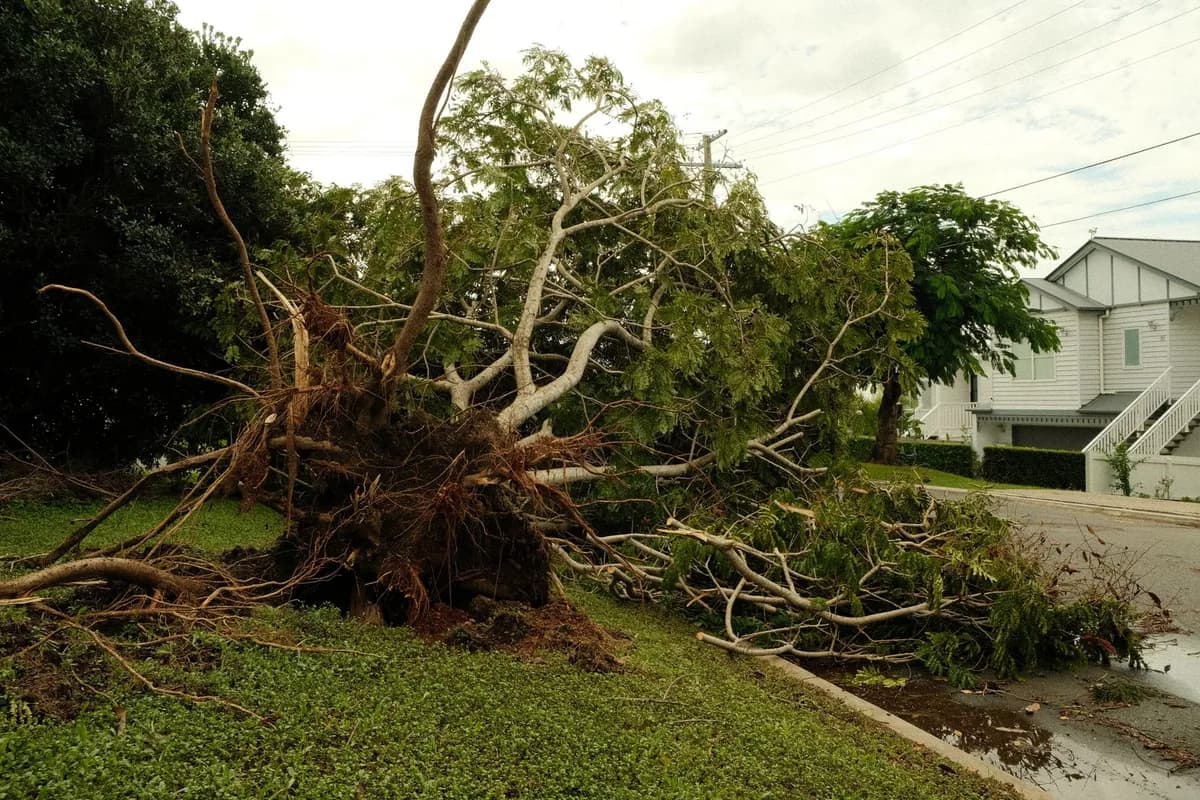
Hunterdon County has a lot of mature trees, and limbs come down in storms. A branch resting on a roof may have punctured the covering, cracked decking, or simply abraded a section of shingles — and the damage underneath is often greater than the surface suggests.
Removing a limb needs care, because the roof under it may no longer be sound and dragging it across intact shingles causes damage of its own. Where a tree is bearing on the structure, that is a situation to treat as urgent.
Documenting what we find
Whether or not you make a claim, clear documentation of the damage is worth having. We record what we find and where, with photographs, so you have a factual account of the roof's post-storm condition.
We are roofers, not insurance adjusters, and we will not tell you what your policy covers or predict how a claim will be handled. What we can do is give you an accurate description of the damage and the work needed to put it right.
Process
How storm damage roof repair works
The same sequence every time, so you always know what happens next.
Full-roof assessment
The whole roof is examined, not just the visible damage, including sealant bonds, edges, ridges and flashing.
Documentation
Findings recorded with photographs so you have a clear account of the roof's condition after the storm.
Temporary protection if needed
Where the roof is open, water entry is stopped before anything else.
Repair scope
A written scope covering all storm-related damage found, including shingles that are unsealed rather than missing.
Repair
Damaged components replaced, flashing rebuilt where affected, and decking repaired where impact has cracked it.
Storm Damage Roof Repair across Hunterdon County
Hunterdon County's building stock varies more than most New Jersey counties, and that changes how this work is approached from one property to the next. A storm damage roof repair job on a nineteenth-century borough house with plank decking and a steep, dormered roof is a different piece of work from the same job on a 1990s development house or on a barn standing in open farmland.
Exposure varies just as much. Properties on the northern ridges and on open farmland take sustained wind, and damage there starts at the rakes, eaves and ridge. River-corridor and valley properties are shaded and damp, dry slowly after rain, and are where moss and organic growth take hold. We assess the property in front of us rather than applying one approach everywhere.
Questions
Storm Damage Roof Repair questions
How soon should storm damage be inspected?
Promptly. An unsealed or creased shingle is not leaking today but will fail in the next storm, and water that has already entered keeps moving through insulation and framing. Early assessment also means the damage is documented close to the event.
My roof looks fine from the ground. Should I still have it checked?
After a significant wind event, yes. The most common form of wind damage — broken sealant bonds — is invisible from ground level and often invisible from the roof surface too without lifting shingles to check. A quick look now is cheaper than a leak later.
Do you handle insurance claims?
We document what we find thoroughly and provide a clear written scope, which is what insurers ask for. We are not adjusters and will not advise you on coverage or represent you with your insurer — contact them directly and promptly.
Do missing shingles always mean a new roof?
No. If the covering is otherwise in reasonable condition and the loss is confined, replacing the affected shingles and checking the surrounding area is usually the right repair. Widespread creasing, bruising or granule loss across multiple planes is a different conversation.
Related roofing services
Emergency Roof Repair
Urgent response for active leaks, storm-opened roofs and exposed decking, starting with stopping water entry.
Learn moreRoof Repair
Targeted repairs for leaks, wind-lifted shingles, failed flashing and damaged roof penetrations.
Learn moreRoof Inspection
A documented assessment of covering, flashing, penetrations, decking and ventilation — with a plain-language report.
Learn moreRoof Replacement
Full tear-off and rebuild of the roofing system, from decking and underlayment through to ridge ventilation.
Learn more
Storm Damage Roof Repair by municipality
Service-area pages covering the housing stock and roofing conditions characteristic of each place.
Request an Estimate
Request an estimate for storm damage roof repair
Share what you are seeing and where the property is. We will review it and get back to you using the details you provide.
Need storm damage roof repair in Hunterdon County?
Tell us what you are seeing and we will take a look. You will get a clear explanation of what is wrong, what it needs, and what it will cost — in writing.