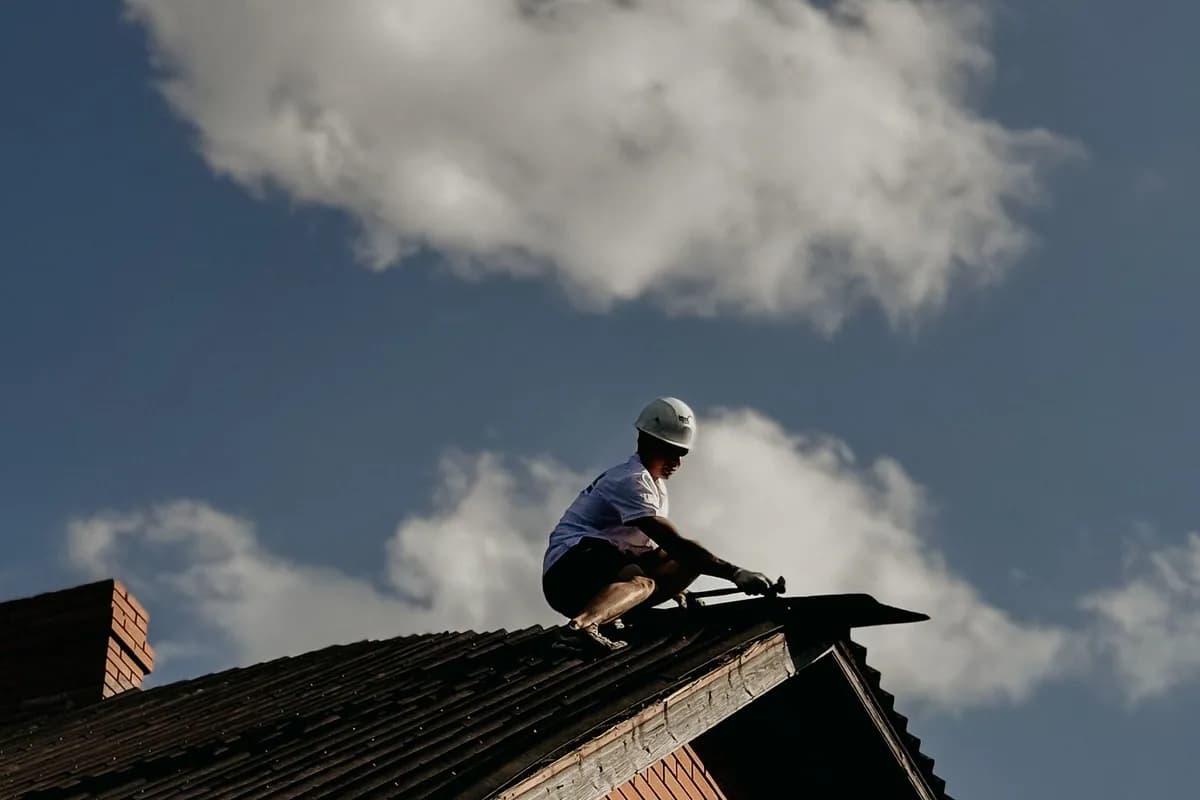
Roof Repair
Targeted repairs for leaks, wind-lifted shingles, failed flashing and damaged roof penetrations.
Learn moreServing Hunterdon County, New Jersey

Hunterdon County, NJ
Roof repair, roof replacement, residential roofing and commercial roofing across all 26 municipalities — from the Delaware River boroughs to the northern uplands.
All 26 municipalities, from the Delaware River boroughs to the northern uplands.
Houses, farm buildings, mixed-use properties and low-slope commercial roofs.
Targeted repairs where they make sense, full replacement where they do not.
What we found, why it matters, and what it will cost — in writing.
Roofing in Hunterdon County
Hunterdon County does not have a typical house. Within a half-hour drive you can find eighteenth-century stone farmhouses with steep plank-decked roofs, dense rows of nineteenth-century buildings in the Delaware River boroughs, post-war ranches and split-levels, and recent construction with deliberately complicated rooflines. Each of those ages differently and fails differently.
That matters because the right work depends on what is actually in front of you. A simple gable over a well-ventilated attic is a different proposition from a Victorian roof with four dormers, three valleys and a chimney part-way up a slope. The failure points are not in the same places, and neither is the labour.
What stays constant is the order of things. Water gets in where the roof is interrupted — at flashing, valleys and penetrations — far more often than through the open field of shingles. Wind does its damage at the edges. Attic ventilation quietly determines how long the covering lasts. Get those three right and a roof performs; get them wrong and no shingle brand will rescue it.
Roofs rarely fail across their whole surface. They fail at a seam, a flashing detail or a single penetration, and water finds that one place and travels from it.
Gusts get under shingles at rakes, eaves and ridges first. The most common damage breaks the sealant bond without moving anything — invisible until the next storm.
New Jersey winters cycle above and below freezing repeatedly. Water works into small gaps, freezes, expands, and enlarges them a little more each time.
Much of the county is well wooded. That means limbs during storms, continuous debris in gutters and valleys, and shaded slopes that never fully dry.
What We Do
Repair where the covering still has life in it, replacement where it does not, and an honest assessment to tell the two apart.
Targeted repairs for leaks, wind-lifted shingles, failed flashing and damaged roof penetrations.
Learn more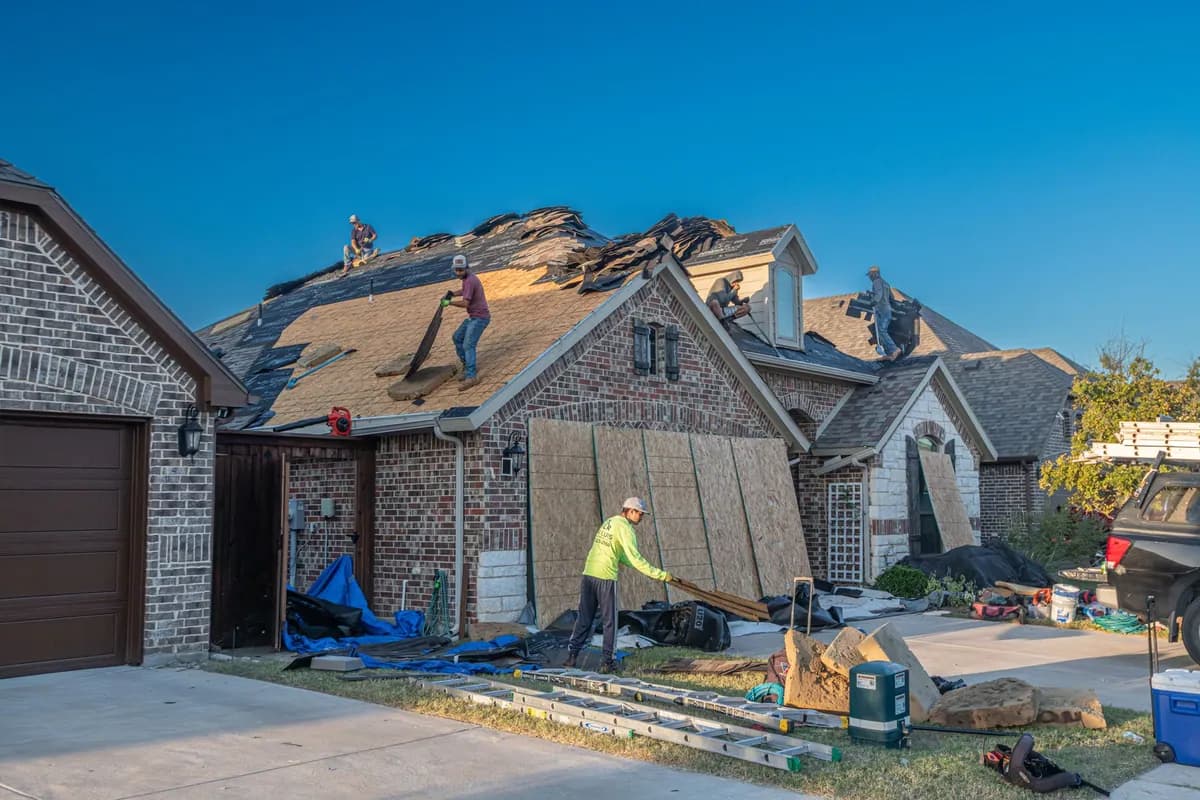
Full tear-off and rebuild of the roofing system, from decking and underlayment through to ridge ventilation.
Learn more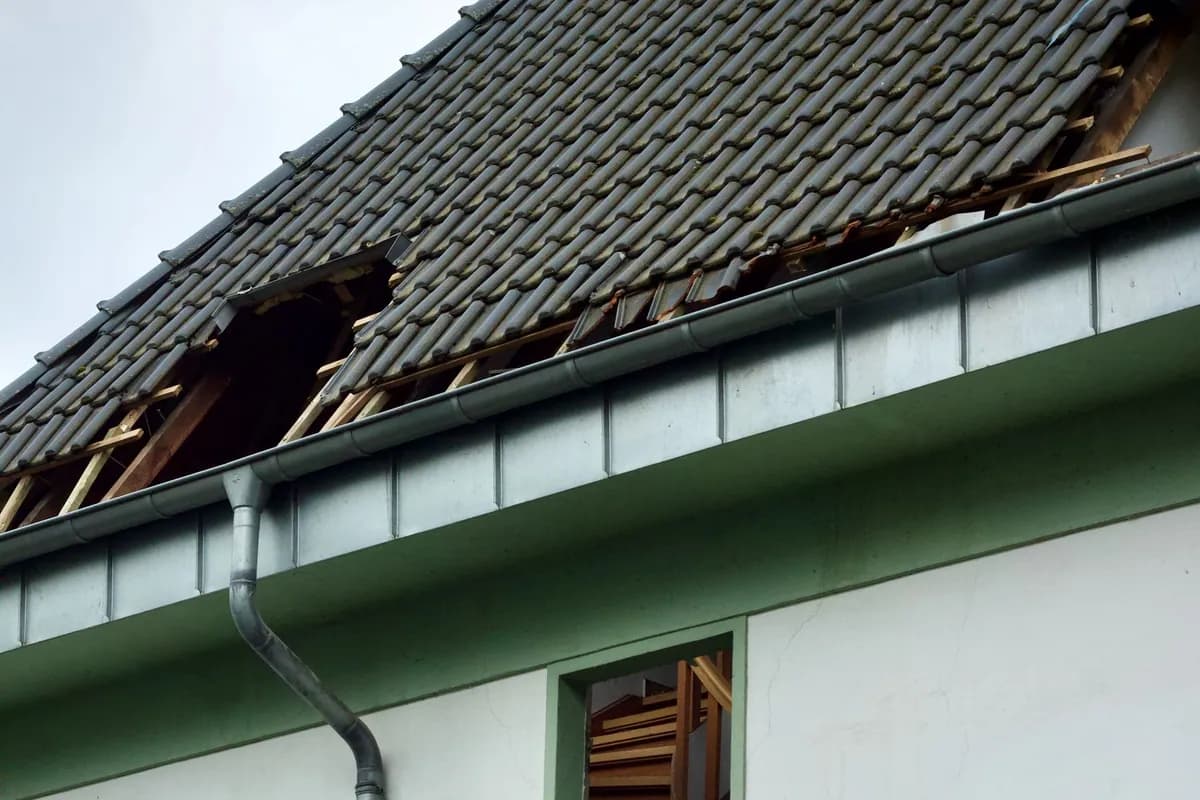
Urgent response for active leaks, storm-opened roofs and exposed decking, starting with stopping water entry.
Learn more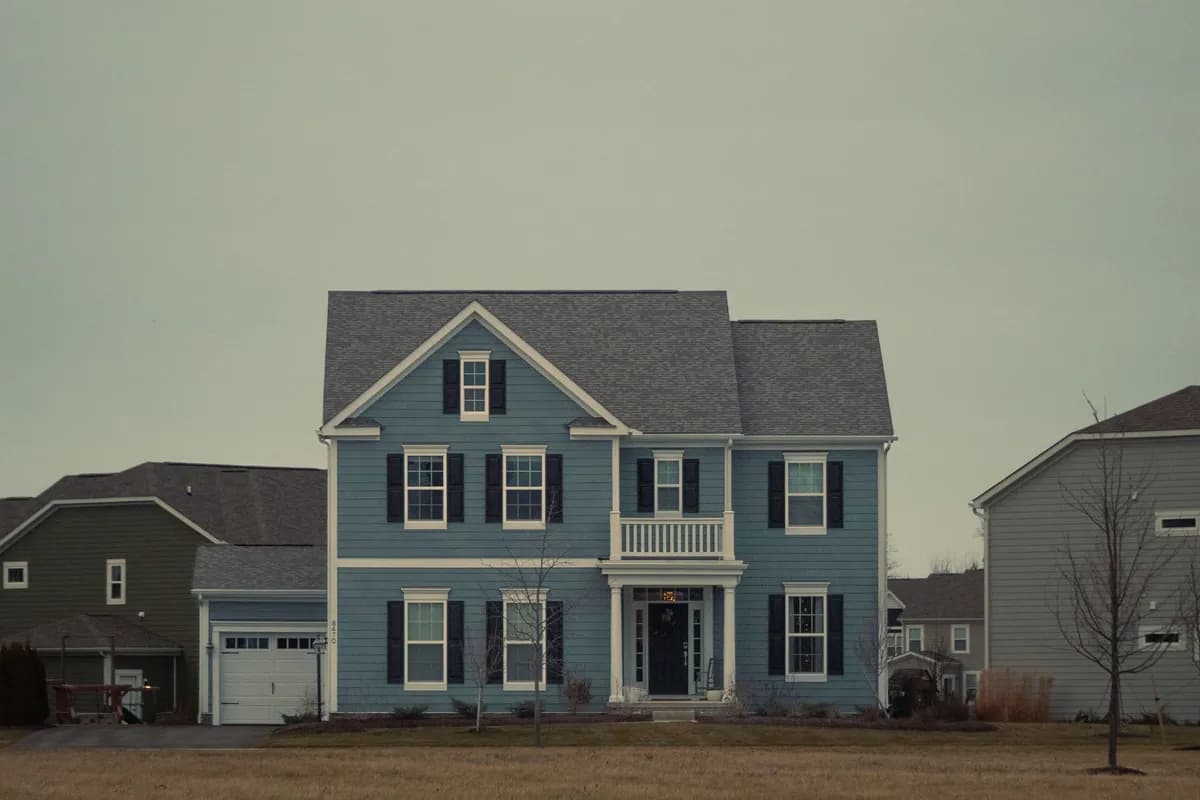
Roofing for houses across Hunterdon County, from mid-century colonials to farmhouses and newer developments.
Learn more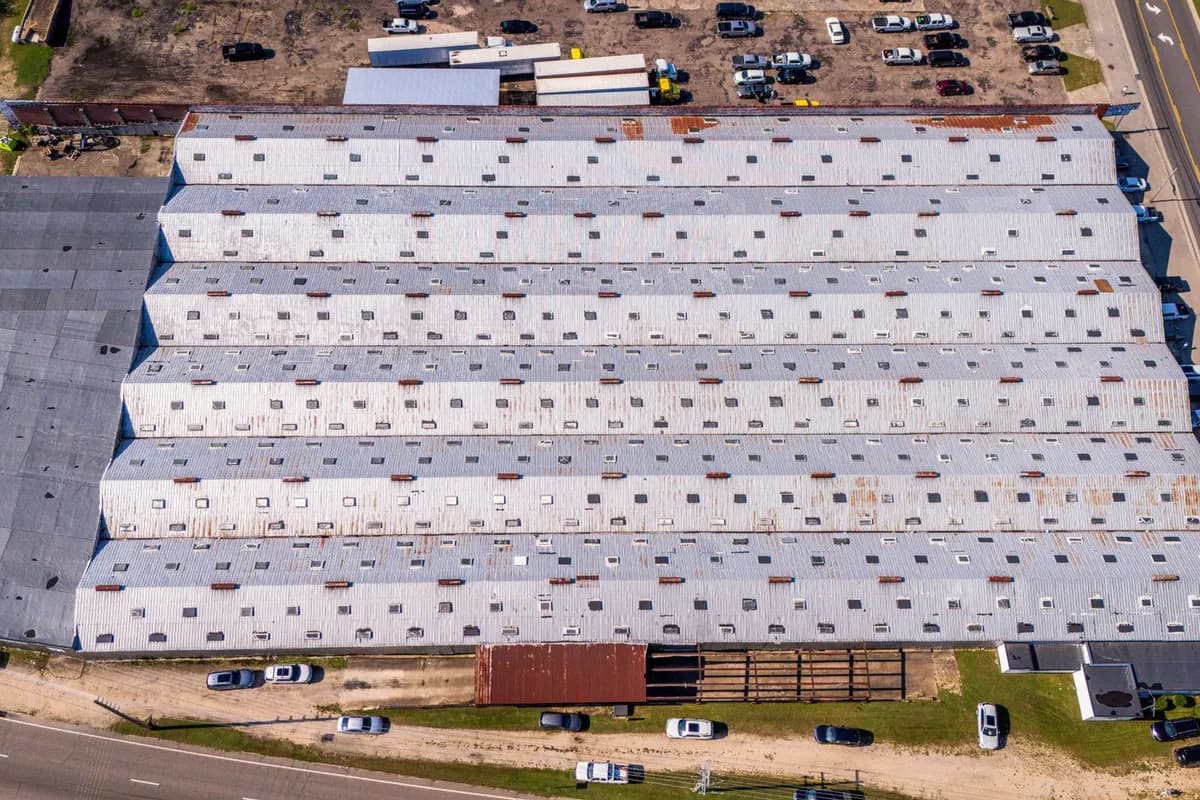
Low-slope and steep-slope roofing for commercial, retail, light industrial and multi-unit properties.
Learn more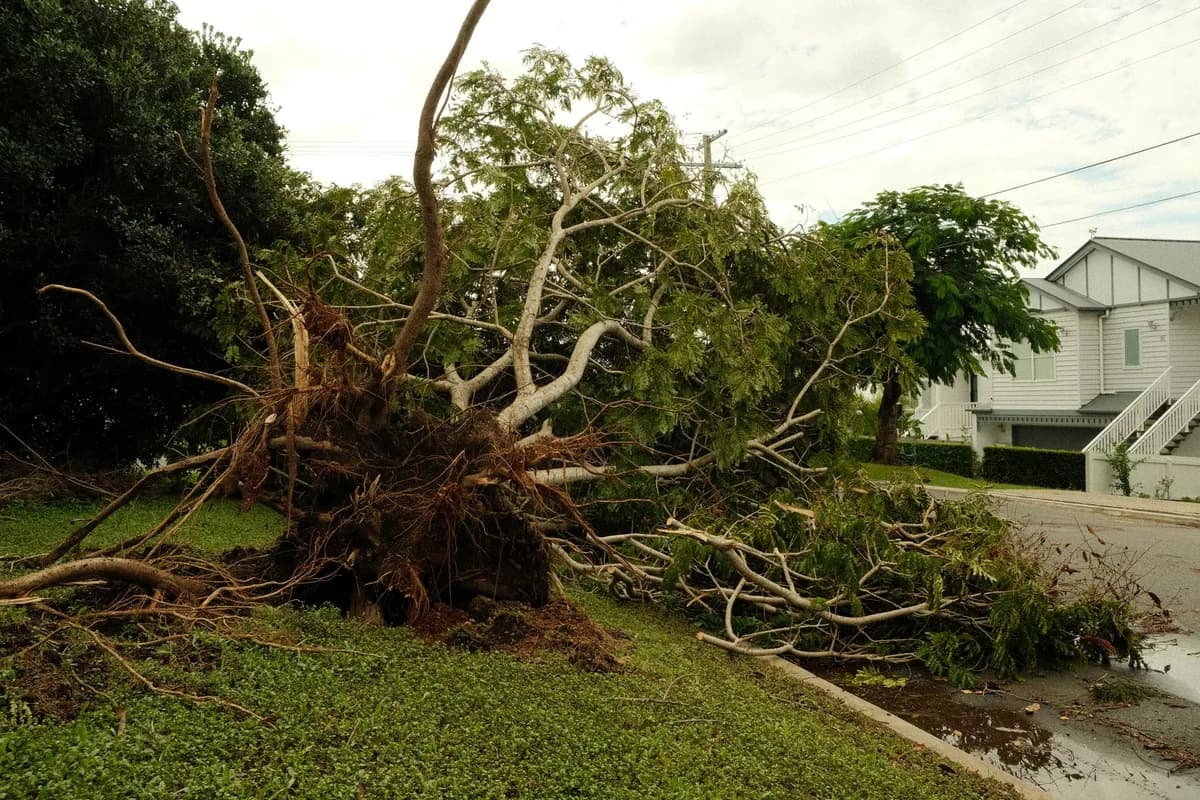
Assessment and repair after wind, hail, falling limbs and heavy rain — including the damage that is not obvious.
Learn moreRoof Repair
Water entering a roof runs along the underside of the sheathing, travels down a rafter, and drops where a nail or a seam interrupts it. By the time it reaches a ceiling it can be several feet from where it got in — and often uphill. That is why patching directly above a stain so frequently changes nothing.
A proper repair works backwards from the interior evidence. Staining on the sheathing, rusted nail shanks and damp insulation in the attic show where water has been travelling, and that points to the entry point on the roof surface.
Roof Replacement
A replacement is a rebuild of a layered system, not a new set of shingles. Drip edge at the eaves, ice and water membrane where water is most likely to be held or forced, underlayment across the field, new metal flashing at every transition, a starter course so the perimeter is sealed, then the covering — and ventilation completed before the ridge caps go on.
Tearing off matters for the same reason. Going over an existing layer hides the condition of the decking and the flashing, which is exactly what you are paying to have put right. With the deck exposed, soft sheathing can be found and replaced rather than guessed at.
Why Work With Us
No pressure, no invented urgency, and no recommendation to replace a roof that still has years left in it.
The roof surface and, where access allows, the attic side — so the recommendation is based on where water is actually travelling rather than where the stain appeared.
If the covering has serviceable life and the damage is confined, we will tell you that. An assessment that always concludes 'new roof' is not an assessment.
Roofing cement smeared over a joint becomes the waterproofing, and it has a far shorter life than metal. We rebuild the detail instead of covering it.
A ridge vent above blocked soffits moves almost no air. We check that intake exists and is clear, because it is often why a roof aged faster than it should.
What is included, what the materials are, and how decking replacement is priced if the tear-off reveals soft sheathing. No surprises mid-job.
All 26 municipalities, and we plan for what each one involves — tight borough frontages, long rural drives, steep hillside sites.
Roofing Systems
Pitch decides what a roof can legitimately carry. Asphalt shingles need slope to shed water; below roughly 2:12 they are not a waterproofing system, which is why so many shallow porch and rear-addition roofs leak no matter how often they are patched.
The rest is a question of building and exposure. Metal suits large simple planes, sheds snow readily and lasts a long time. Membrane systems belong on anything low-slope. Asphalt remains the sensible default on most pitched residential roofs in the county.
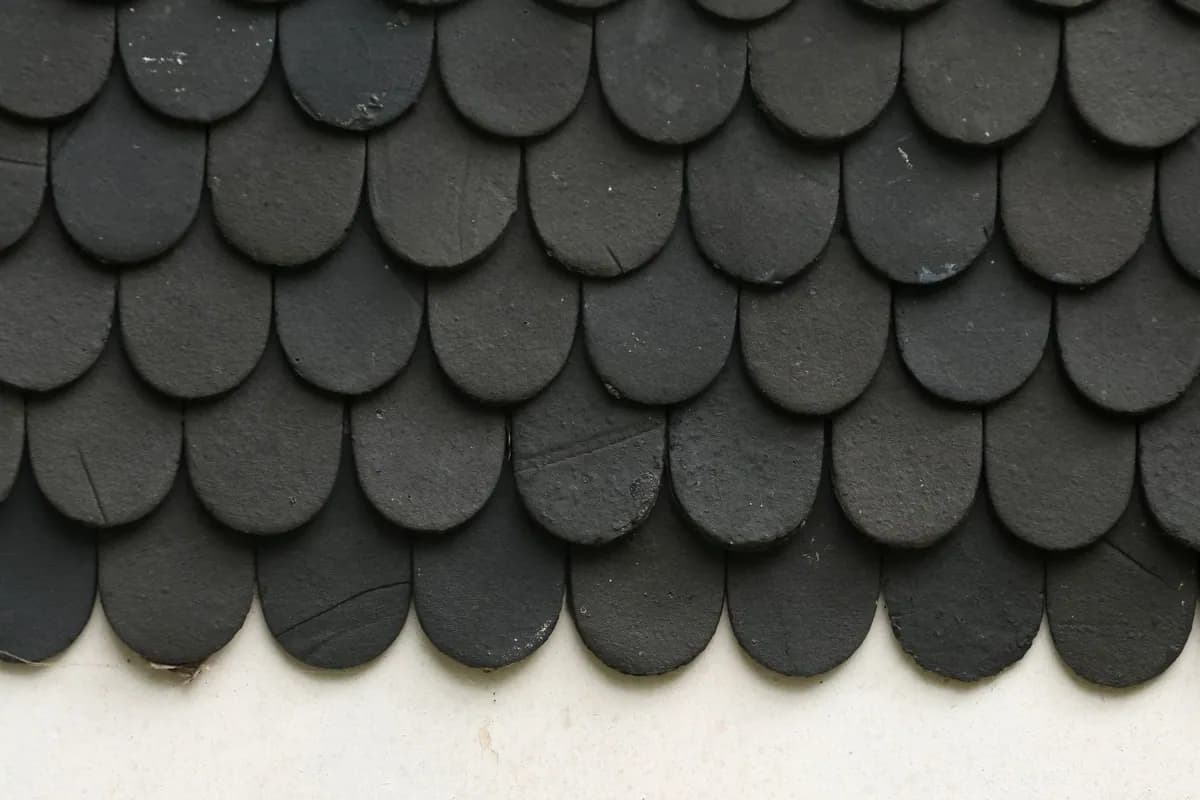
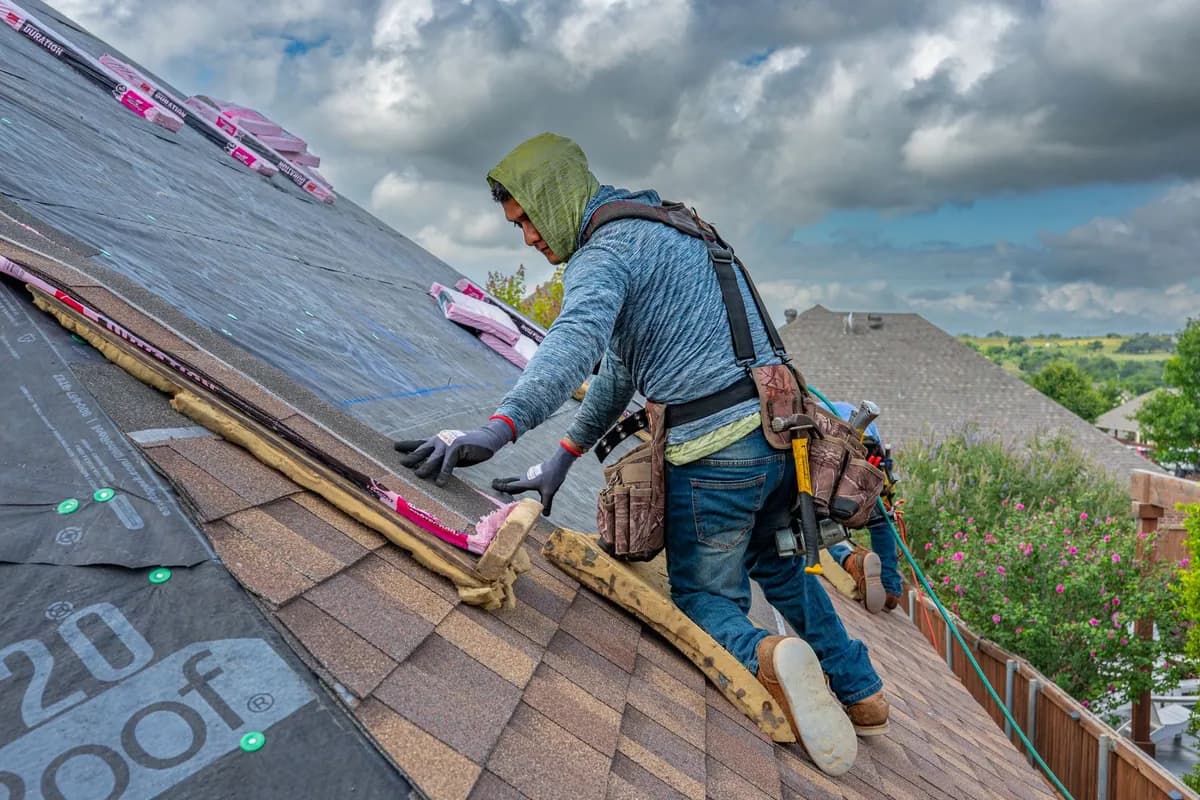
The most common covering on New Jersey homes — architectural and three-tab shingle systems, properly detailed.
Learn more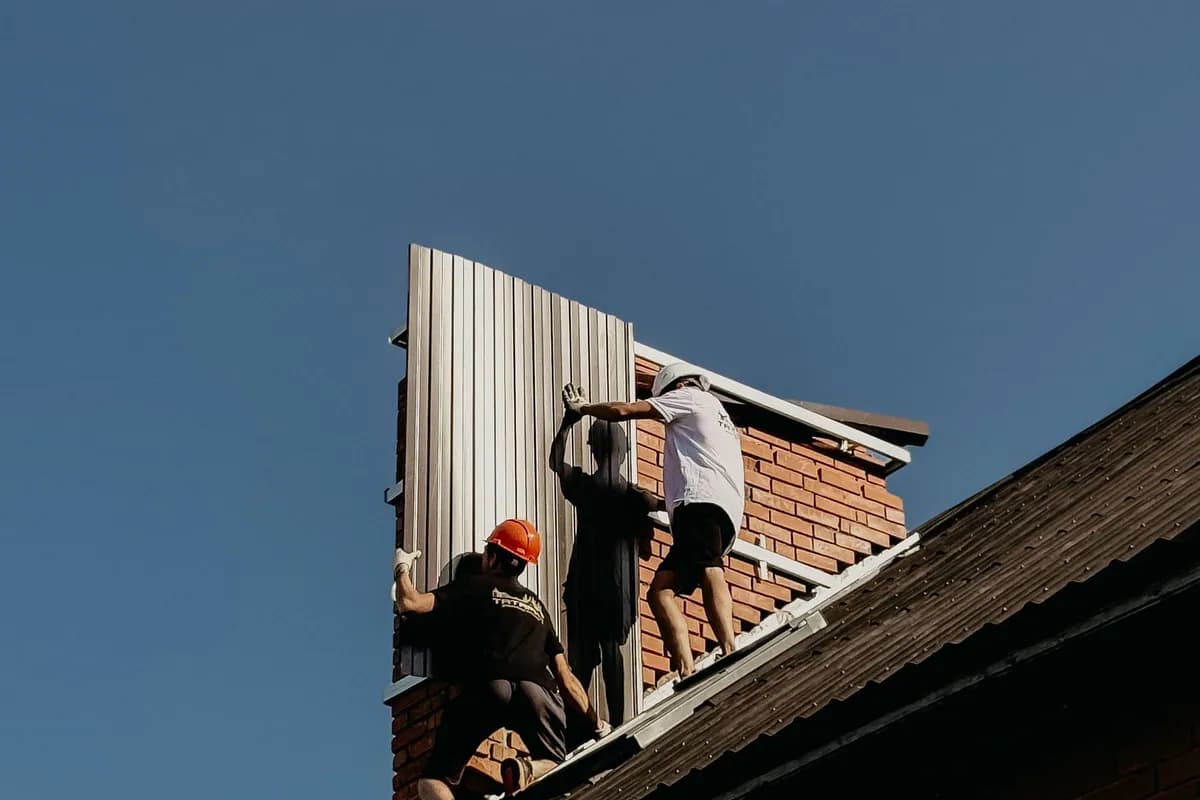
Standing seam and metal panel roofing — long service life, excellent snow shedding, suited to rural properties.
Learn more
Low-slope membrane systems for additions, porch roofs, dormers and commercial buildings.
Learn more
Gutters, downspouts and drainage — the part of the roof system that decides where the water actually goes.
Learn moreService Area
From the Delaware River boroughs of Lambertville, Stockton, Frenchtown and Milford, through Flemington and the central farmland, to the wooded uplands of Lebanon Township, Tewksbury and Califon.
Making the Call
The question is not whether your roof is damaged. It is whether the covering as a whole still has serviceable life, and whether the damage is confined enough that repairing it makes sense.
Storm & Emergency
After a storm, most people look for missing shingles. Missing shingles are real damage, but they are the minority of what a significant wind event does. The commonest damage breaks the adhesive bond holding shingles down without displacing them at all — the roof looks untouched and loses those shingles in the next storm.
If water is coming in now, the priority is not a finished repair. It is stopping water reaching insulation, ceilings and framing, then assessing the full extent once the roof is stable.
Call (914) 906-5748 if your roof is open or actively leaking. We do not advertise round-the-clock availability, because we will not promise a response window we have not verified — but we will tell you honestly when we can get there.
Our Process
The same sequence on every job, so you always know what happens next.
Tell us what you are seeing — a stain, a missing shingle, a roof you know is old. Photographs help if you have them.
We assess the roof surface and, where access allows, the attic side, so the diagnosis is based on where water is actually travelling.
A plain explanation of what we found and why it matters, including an honest view on whether repair or replacement is the better use of your money.
Scope, materials and price in writing before any work begins, so you know exactly what is included.
Carried out with the property protected. Failed components are removed and rebuilt rather than covered over, and we talk to you before any scope changes.
Debris cleared, a magnetic sweep for nails, and a review of what was done and what the work revealed.
Where We Work
Each municipality page covers the housing stock, exposure and roofing problems that are actually characteristic of that place.
Borough
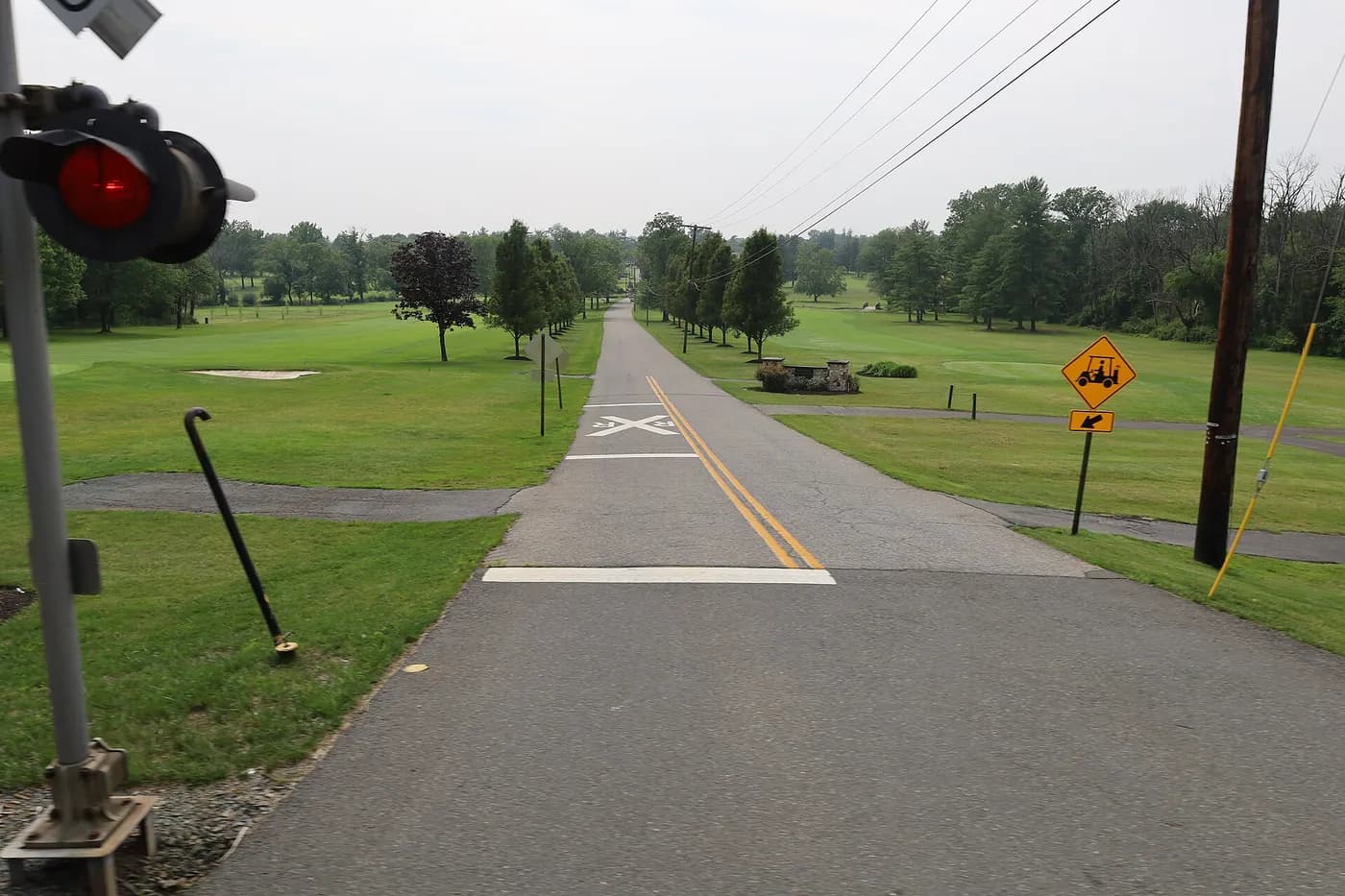
Flemington occupies just over one square mile entirely surrounded by Raritan Township, with Main Street running through a dense historic core and residential streets branching off it. Its buildings sit on small lots close to the street, which is characteristic of a nineteenth-century county seat rather than a suburban borough.
Roofing in Flemington →Photo: SeichanGant / CC BY-SA 4.0
Township
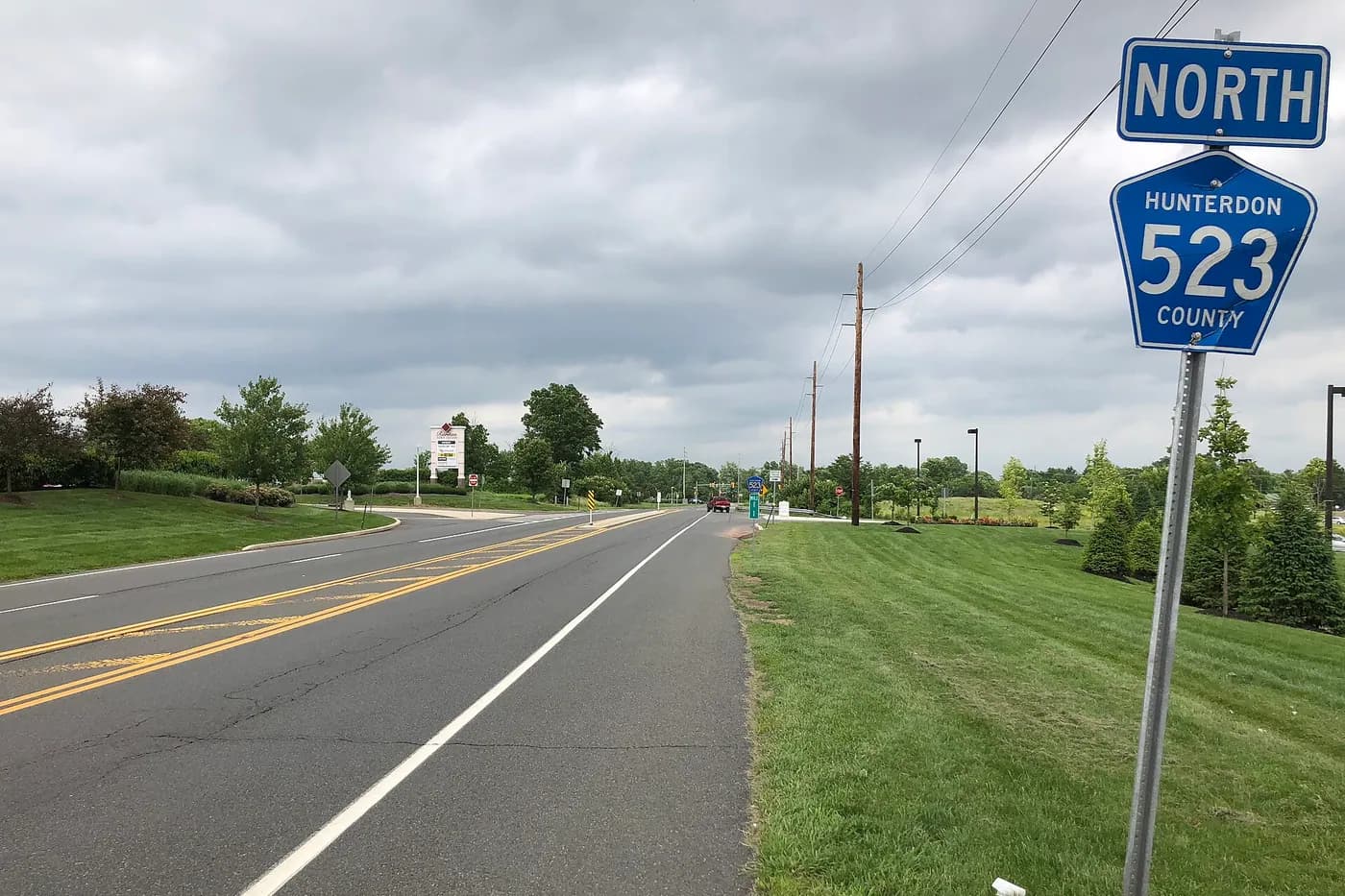
Raritan Township covers a large area of central Hunterdon County, surrounding Flemington and extending out to open farmland. Hunterdon Medical Center, several shopping centres and the Route 31 and 202 corridors sit within it, alongside extensive residential subdivisions and remaining agricultural land.
Roofing in Raritan Township →Photo: Famartin / CC BY-SA 4.0
Township
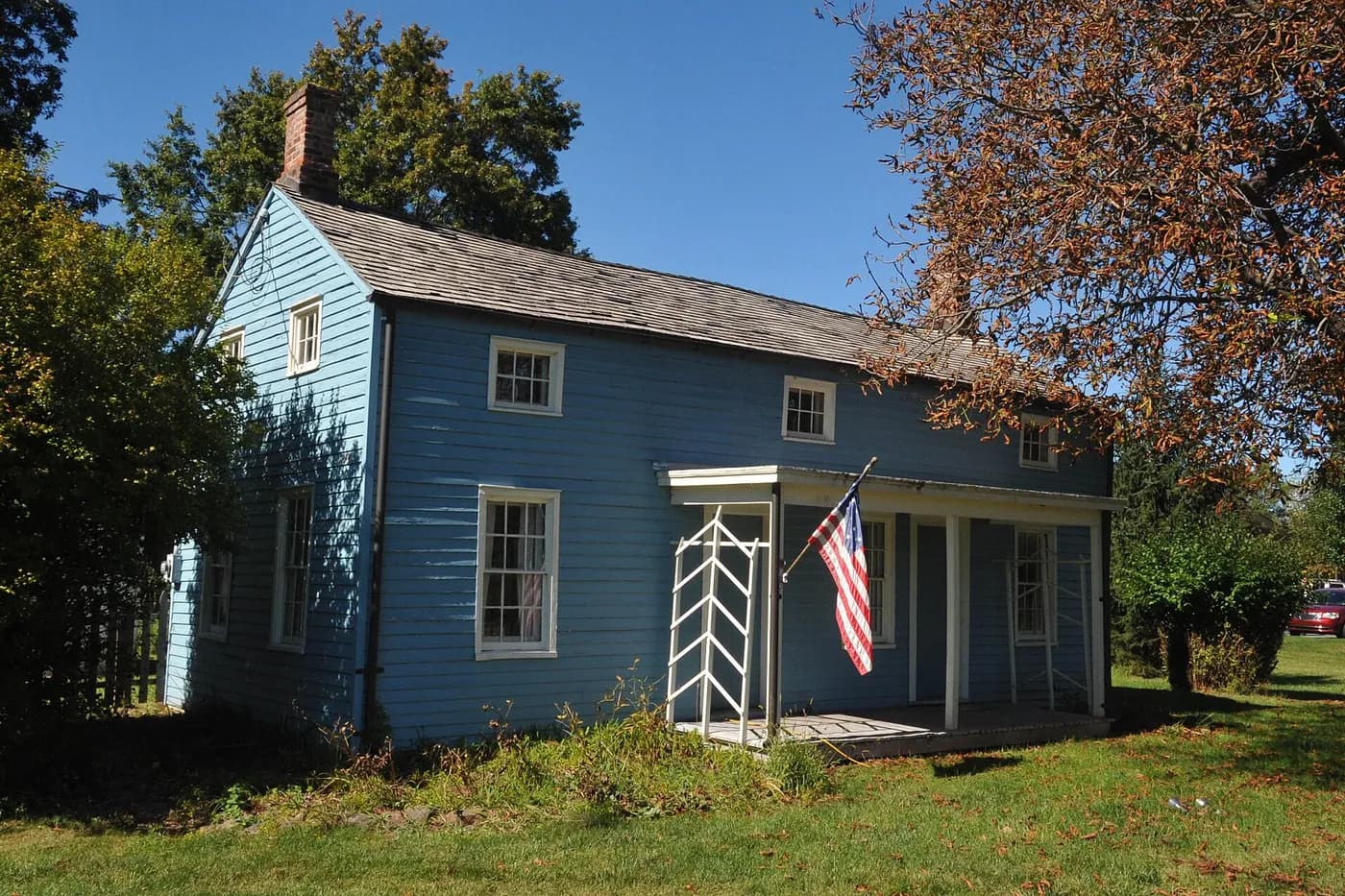
Readington Township spreads across eastern Hunterdon County, bordered by Round Valley Reservoir to the west and reaching toward Somerset County in the east. Solberg Airport sits within the township, and a substantial proportion of its land remains in active agriculture or farmland preservation.
Roofing in Readington Township →Photo: Jerrye & Roy Klotz, MD / CC BY-SA 3.0
Town
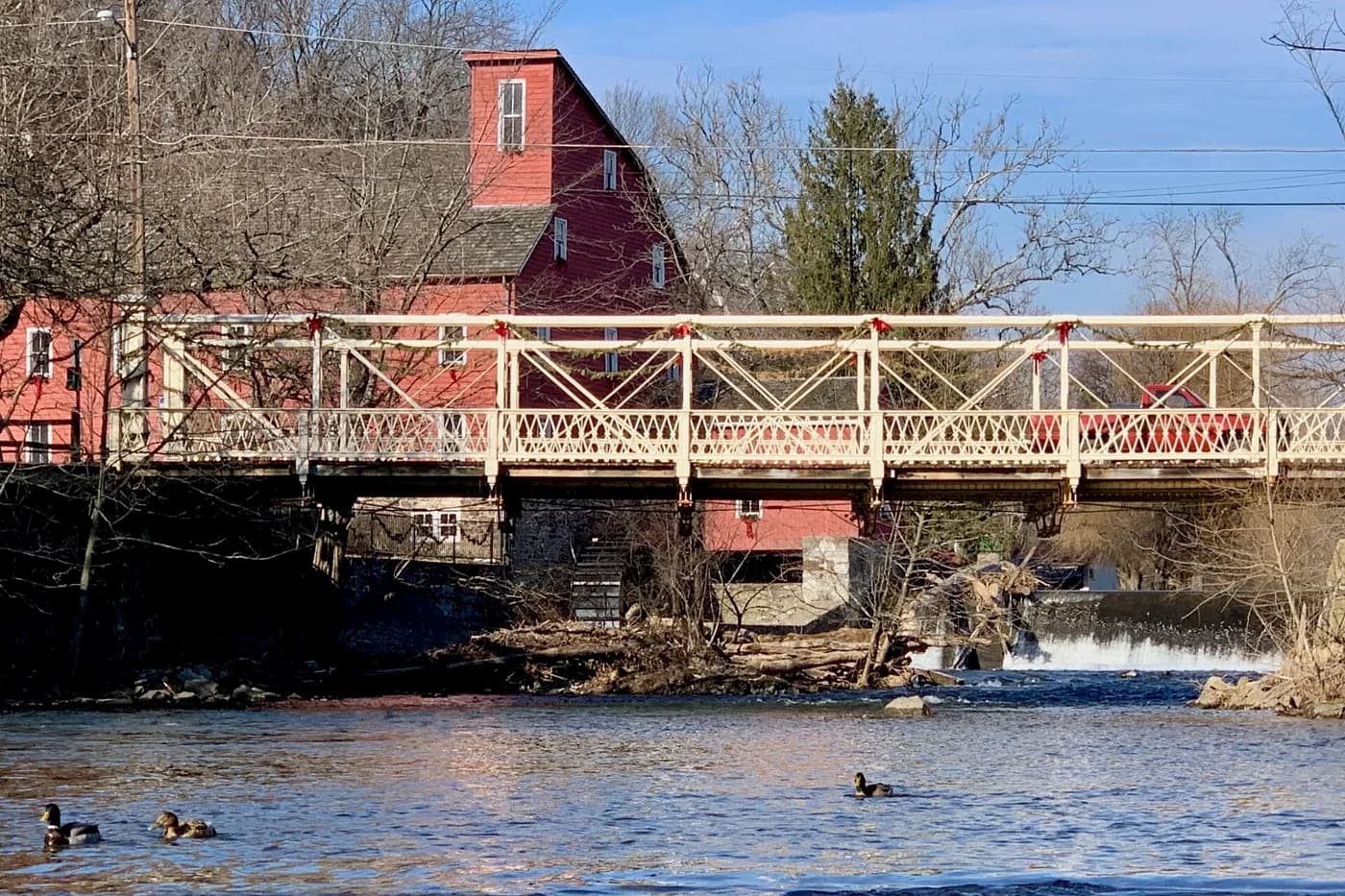
Clinton Town occupies a small area on both sides of the South Branch Raritan River, immediately off Route 31 and near the Route 78 corridor. Its historic Main Street and riverside buildings form a tightly built core, with residential streets rising from the river on either side.
Roofing in Clinton →Photo: Zeete / CC BY-SA 4.0
City
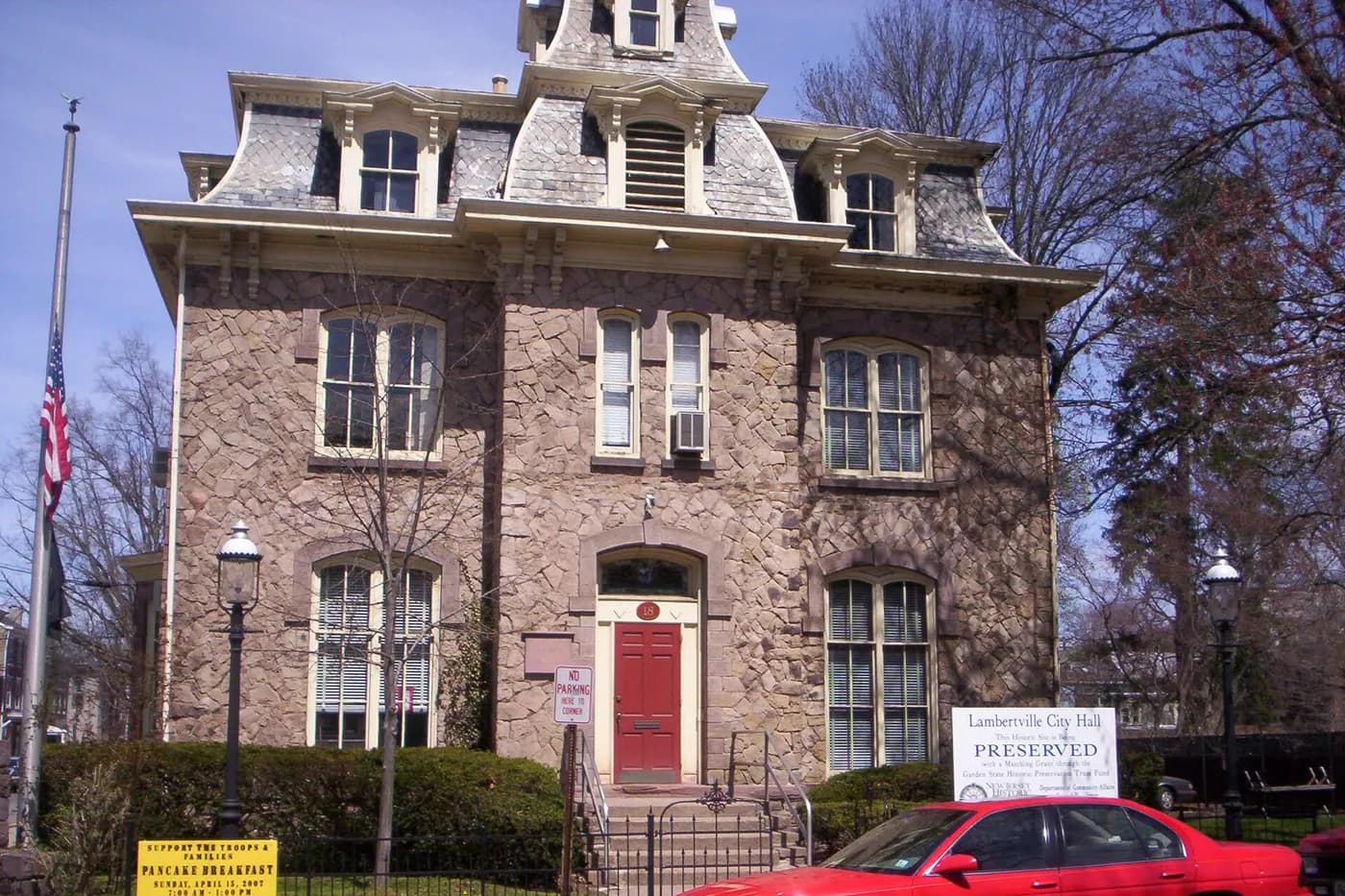
Lambertville sits on the Delaware River opposite New Hope, Pennsylvania, connected by the New Hope–Lambertville Bridge. The Delaware and Raritan Canal runs through the city, and the land rises steeply away from the river, so streets climb quickly from the flat riverside blocks into the hillside above.
Roofing in Lambertville →
Township
Lebanon Township is one of Hunterdon County's largest municipalities by area, covering the northern uplands including part of Musconetcong Mountain and Voorhees State Park. The terrain is genuinely hilly and largely wooded, with houses scattered on substantial parcels along winding roads rather than concentrated in a centre.
Roofing in Lebanon Township →Photo: Famartin / CC BY-SA 4.0
Roofing Resources
Practical explanations written for homeowners, not for search engines.
Why two houses on the same street get very different quotes, and the specific factors that move the number up or down.
Updated
The range is wide, and the reasons are mostly under your control — ventilation and installation quality matter more than the brand.
Updated
A framework for deciding, including the situations where repair is clearly right and the ones where it is throwing money at a roof that is finished.
Updated
Common Questions
It comes down to whether the covering as a whole still has serviceable life and whether the damage is confined. A single failed component — a cracked pipe boot, a length of failed flashing, a few shingles lost in a storm — on an otherwise sound roof is a repair. Leaks appearing in several unrelated places, or curling, cracking and granule loss across multiple planes, means the covering itself is finished and patching it only buys short reprieves.
Most leaks start where the roof is interrupted rather than in the open field of shingles. The usual sources are failed flashing at a chimney, wall or skylight; worn valley metal; a cracked rubber pipe boot at a plumbing vent; wind-damaged or missing shingles; and ice damming forcing water back up under the covering. Previous repairs made with roofing cement instead of metal are a very common underlying cause.
Promptly. The most common form of wind damage breaks the adhesive bond holding shingles down without moving them at all, so the roof looks untouched but will lose those shingles in the next storm. Early assessment also means damage is documented close to the event, and any water that has already entered has less time to travel through insulation and framing.
A typical single-family asphalt shingle roof is often completed in one to three working days. Size, pitch, the number of valleys and dormers, how many layers have to come off and how much decking needs replacing all affect that. Complex roofs and extensive deck repair take longer, and we will tell you what to expect before starting.
Architectural asphalt shingles cover the majority of homes here — they suit the pitches found in the region, handle freeze-thaw cycling and can be repaired in sections. Metal roofing is common on barns, outbuildings and rural properties, and increasingly on houses where a long service life is the priority. Low-slope sections and commercial buildings use membrane systems such as TPO, EPDM or modified bitumen.
Many can. Below roughly 40°F asphalt shingles become less flexible and must be handled carefully, and their sealant strips will not bond until temperatures rise, so a roof installed in winter is weathertight but not fully sealed until spring. Where a permanent repair genuinely needs warmer conditions we will say so and can fit temporary protection in the meantime.
Each roof plane is assessed separately for granule loss, curling, cracking and whether the shingles are still sealed. Then the details that actually fail: flashing at walls, chimneys and skylights, valley metal, pipe boots, drip edge and ridge. Where the attic is accessible we check the underside of the decking for staining and moisture, and confirm whether ventilation has both intake and exhaust. You get the findings in plain language with photographs.
Yes. We work across all 26 municipalities in Hunterdon County, from the Delaware River boroughs of Lambertville, Stockton, Frenchtown and Milford, through Flemington, Raritan Township and the central farmland, to the northern uplands of Lebanon Township, Tewksbury and Califon.
Request an Estimate
Share what you are seeing and where the property is. We will review it and get back to you using the details you provide.
Tell us what you are seeing and we will take a look. You will get a clear explanation of what is wrong, what it needs, and what it will cost — in writing.