Hunterdon County Roofing
Emergency Roof Repair in Hunterdon County, NJ
Urgent response for active leaks, storm-opened roofs and exposed decking, starting with stopping water entry.
When a roof opens up, the priority is not a finished repair — it is stopping water from getting into insulation, ceilings and framing. Those first hours decide how much of the damage ends up being roofing work and how much becomes interior work.
Call us at (914) 906-5748 if water is coming in now. Describing what you can see — where it is entering, whether anything is visibly missing from the roof, whether a tree or branch is involved — helps us understand what the situation actually needs.
If water is coming in right now, call (914) 906-5748 rather than waiting on a form. Describing what you can see helps us understand what the situation needs.
When people call us about this
- Water actively dripping or running into the house
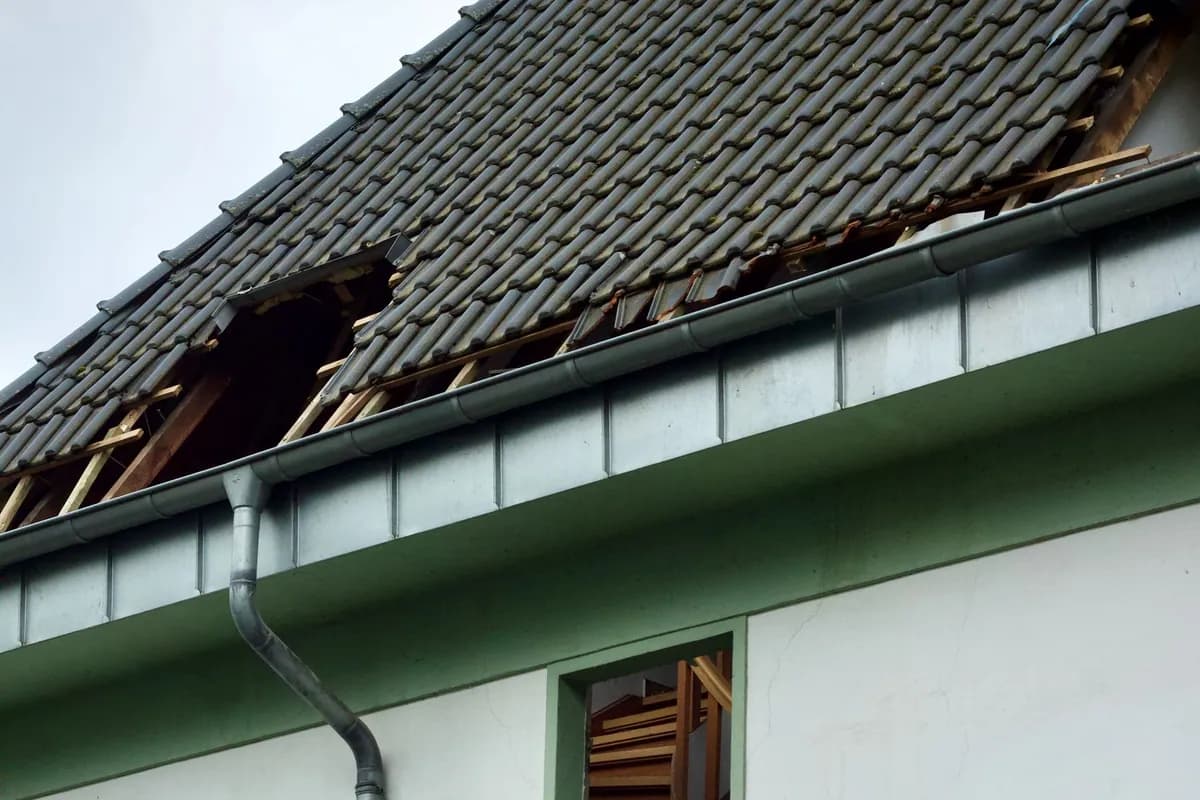
- A section of roof covering torn away, leaving decking exposed
- A branch or tree resting on the roof
- Shingles or roofing material in the yard after a storm
- A ceiling that is sagging or bulging with trapped water
- Wind-driven rain entering around a chimney or skylight
- A visible hole or puncture through the roof surface
What to do before anyone arrives
Move what you can out of the way and put containers under active drips. If a ceiling is bulging with trapped water, that water is going to come through — releasing it deliberately at the low point with a small hole, into a bucket, is usually better than waiting for a section of ceiling to give way at once.
Keep away from anything electrical that is wet, and do not go up on a roof that is wet, storm-damaged or has a tree resting on it. Structural damage is not always visible from the surface, and a roof that has taken an impact may not carry weight where you expect it to.
- Contain drips and move belongings clear
- Relieve trapped water in a bulging ceiling into a container
- Stay off wet, damaged or tree-loaded roofs
- Avoid wet electrical fixtures and switch off affected circuits if safe
- Photograph the damage from ground level for your records
Stabilising the roof first
The first task is temporary weather protection: a properly fastened covering over the opened area, secured so it will hold through the weather that is still coming rather than lifting at the first gust. Loosely weighted material is not protection.
Temporary protection is a stopgap, not a repair. Its purpose is to stop further water entry so a permanent repair can be carried out properly, in appropriate conditions, once the extent of the damage is known.
Assessing the full extent
Once water entry has stopped, the damage can be assessed properly. Wind that removes shingles in one area commonly breaks the sealant bond on shingles elsewhere without displacing them, and those will lift in the next storm — so the assessment covers the whole roof, not only the obvious opening.
Where water has been entering for a while, the assessment extends to the decking and the attic: wet sheathing, saturated insulation and damp framing all need attention, and all of them are easier to deal with early.
Permanent repair
With the extent known, the permanent repair rebuilds what failed: decking replaced where it is soft, membrane and underlayment restored, flashing rebuilt as metal, and the covering reinstated. If the damage is extensive enough that repair is not the sensible answer, we will say so and set out what a replacement would involve.
We do not advertise round-the-clock availability, because we will not promise a response time we have not verified we can meet. What we will do is tell you honestly when we can get there.
Process
How emergency roof repair works
The same sequence every time, so you always know what happens next.
Call
Reach us at (914) 906-5748 and describe what you can see so we understand what the situation needs.
Temporary protection
Water entry is stopped with properly fastened temporary covering over the affected area.
Assessment
The full extent is assessed, including the rest of the roof and the attic side, not just the visible opening.
Repair plan
A clear scope for the permanent repair, or an honest recommendation for replacement where that is the better answer.
Permanent repair
Decking, membranes, flashing and covering rebuilt properly once conditions allow.
Emergency Roof Repair across Hunterdon County
Hunterdon County's building stock varies more than most New Jersey counties, and that changes how this work is approached from one property to the next. A emergency roof repair job on a nineteenth-century borough house with plank decking and a steep, dormered roof is a different piece of work from the same job on a 1990s development house or on a barn standing in open farmland.
Exposure varies just as much. Properties on the northern ridges and on open farmland take sustained wind, and damage there starts at the rakes, eaves and ridge. River-corridor and valley properties are shaded and damp, dry slowly after rain, and are where moss and organic growth take hold. We assess the property in front of us rather than applying one approach everywhere.
Questions
Emergency Roof Repair questions
Are you available 24/7?
We do not advertise 24/7 availability, because we will not promise a response window we have not verified we can meet. Call (914) 906-5748 and we will tell you honestly when we can reach you and what to do in the meantime.
Should I put a tarp up myself?
We would not recommend going onto a wet or damaged roof. Roofs that have taken storm or impact damage may not be structurally sound where they look sound, and a wet slope is genuinely dangerous. Contain water inside the house and let someone with the right equipment handle the roof.
How long can temporary protection stay on?
It is meant to cover the gap between the damage and the permanent repair, not to last a season. Fasteners loosen, material degrades in UV, and every additional storm tests it again. Treat it as days and weeks, not months.
Will my insurance cover storm damage?
That depends entirely on your policy and your insurer, and we are not in a position to tell you what yours covers. What we can do is document what we find clearly, which is what your insurer will want. Photograph the damage early and contact your insurer promptly.
Related roofing services
Storm Damage Roof Repair
Assessment and repair after wind, hail, falling limbs and heavy rain — including the damage that is not obvious.
Learn moreRoof Repair
Targeted repairs for leaks, wind-lifted shingles, failed flashing and damaged roof penetrations.
Learn moreRoof Inspection
A documented assessment of covering, flashing, penetrations, decking and ventilation — with a plain-language report.
Learn moreRoof Replacement
Full tear-off and rebuild of the roofing system, from decking and underlayment through to ridge ventilation.
Learn more
Emergency Roof Repair by municipality
Service-area pages covering the housing stock and roofing conditions characteristic of each place.
Request an Estimate
Request an estimate for emergency roof repair
Share what you are seeing and where the property is. We will review it and get back to you using the details you provide.
Need emergency roof repair in Hunterdon County?
Tell us what you are seeing and we will take a look. You will get a clear explanation of what is wrong, what it needs, and what it will cost — in writing.