How Roof Ventilation Affects a Home
The least visible part of a roof system and the one that most often explains why a roof failed early.

Ventilation is the part of a roof nobody sees and few people think about, and it is regularly the reason a roof that should have lasted twenty-five years lasted fifteen.
The principle is simple. Air needs to enter the attic low down, at the soffits, and leave high up, at the ridge. If either half is missing, the system does not work.
What happens in summer
Sun heats the roof covering, which heats the air in the attic beneath it. Without a way out, that heat builds, and an unventilated attic on a hot day gets dramatically hotter than the outside air.
That heat then works on the shingles from underneath while the sun works on them from above. Asphalt ages with heat exposure, so a roof cooked from both sides reaches the end of its life sooner. It also pushes heat down into the living space, which your air conditioning then has to remove.
What happens in winter
Winter is where the more serious damage occurs. Warm, moist air from the house rises into the attic — through gaps around light fittings, pipes, the loft hatch and wiring runs. If it cannot escape, it meets the cold underside of the roof deck and condenses.
Over time that moisture degrades the sheathing the shingles are nailed to, rusts fasteners, and saturates insulation, which stops the insulation working. Frost on the underside of the deck is the visible version of this and is a clear signal.
Ice dams, and where they really come from
An ice dam forms when heat escaping into the attic warms the upper roof enough to melt the snow lying on it. That melt water runs down the slope until it reaches the eave overhang, which is not warmed from below because there is no heated space under it. There it refreezes.
The ice builds into a ridge, and subsequent melt water backs up behind it and sits on the roof — where it can work back under the shingles, because shingles shed running water rather than holding back standing water.
The real fix is upstream: air sealing to stop warm air entering the attic, insulation to reduce heat transfer, and ventilation to keep the deck near outside temperature. Ice and water membrane at the eaves protects against the consequence but does not address the cause. Clearing gutters helps but does not prevent dams.
- Air seal penetrations between the house and attic
- Ensure insulation is adequate and not blocking the eaves
- Provide balanced intake and exhaust ventilation
- Install ice and water membrane at the eaves as protection
Balanced means both halves
The single most common ventilation fault is exhaust without intake. A ridge vent looks like ventilation, and on its own it achieves very little, because air cannot leave a space that no air is entering.
The usual culprit is insulation pushed tight into the eaves, blocking the soffit vents completely. Baffles are what keep that channel open, holding insulation back so air can pass from the soffit up into the attic.
Mixing exhaust types can also work against you. Multiple different exhaust vents at different heights can end up pulling air from each other rather than from the soffits, short-circuiting the intended path.
How to tell whether yours is working
In winter, look for frost or dampness on the underside of the sheathing. In summer, notice whether the attic is extraordinarily hot compared with outside. Recurring ice dams at the same eaves every year are a strong indicator.
From outside, look at whether the soffits have vents at all, and from inside, whether you can see daylight or feel air movement at the eaves. Insulation packed against the roof deck at the perimeter is the classic sign of a blocked intake.
Fixing it at the right time
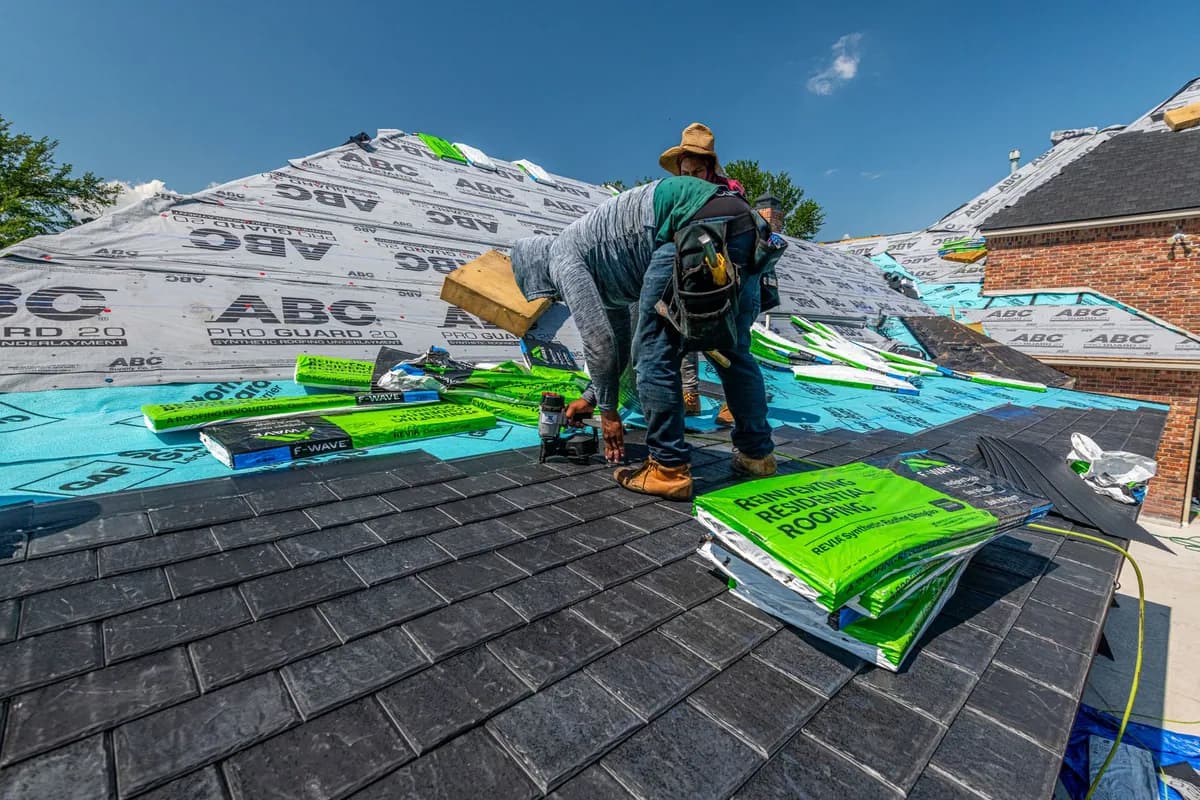
The ideal time to address ventilation is during a roof replacement, when the ridge is open and access is straightforward. Adding ridge ventilation then costs far less than doing it as a separate job later.
Intake is often the harder half to fix and may involve soffit work and baffles. It is worth doing properly, because exhaust without intake is ventilation on paper only.