How to Prepare for Roof Replacement
What to do in the days before, what the work is actually like to live alongside, and the one thing most people forget about their attic.
A roof replacement is a noisy, vibration-heavy job carried out directly above your living space. None of that is a problem, but a little preparation makes the few days considerably easier.
Here is what actually helps, in rough order of how often people wish they had thought of it.
Your attic will rain debris — move things first
This is the one most people do not anticipate. Tear-off and nailing shake the roof deck, and decades of accumulated dust, old nail fragments and debris come down through the gaps between boards into the attic.
Anything stored in the attic should be moved out or covered with sheeting. On older homes with plank decking, the gaps between boards are wide enough that a surprising amount comes through.
Inside the house
Take pictures off the walls on upper floors, particularly anything heavy or fragile, and remove items from shelves that could vibrate off. The hammering transmits further through the structure than you expect.
If you work from home, plan around it. The noise is sustained and genuinely disruptive to calls. If anyone in the house sleeps during the day, that is worth mentioning when scheduling.
- Take down wall-hung pictures and mirrors upstairs
- Clear shelves of anything that could vibrate off
- Cover or remove attic contents
- Plan around the noise if you work from home
Outside the house
Move vehicles out of the driveway and well clear of the house — both to keep them safe from debris and to leave access for deliveries and the dumpster. Ask in advance where the dumpster will sit.
Point out anything delicate in the landscaping before work starts. Areas below the work get covered, but a specimen plant or a fragile structure is worth flagging specifically rather than assuming it will be spotted.
Move patio furniture, grills and planters away from the walls, and take down anything hanging on the exterior near the eaves.
Pets and children
The noise is stressful for animals, and there will be people moving around the house, ladders against the walls and gates potentially left open during deliveries. A quiet room at the far side of the house, or a day elsewhere, is kinder to a nervous pet.
Children should be kept clear of the work area entirely. Falling debris is a genuine hazard, and dropped nails around the perimeter are a real risk until the magnetic sweep at the end.
What to expect during the work
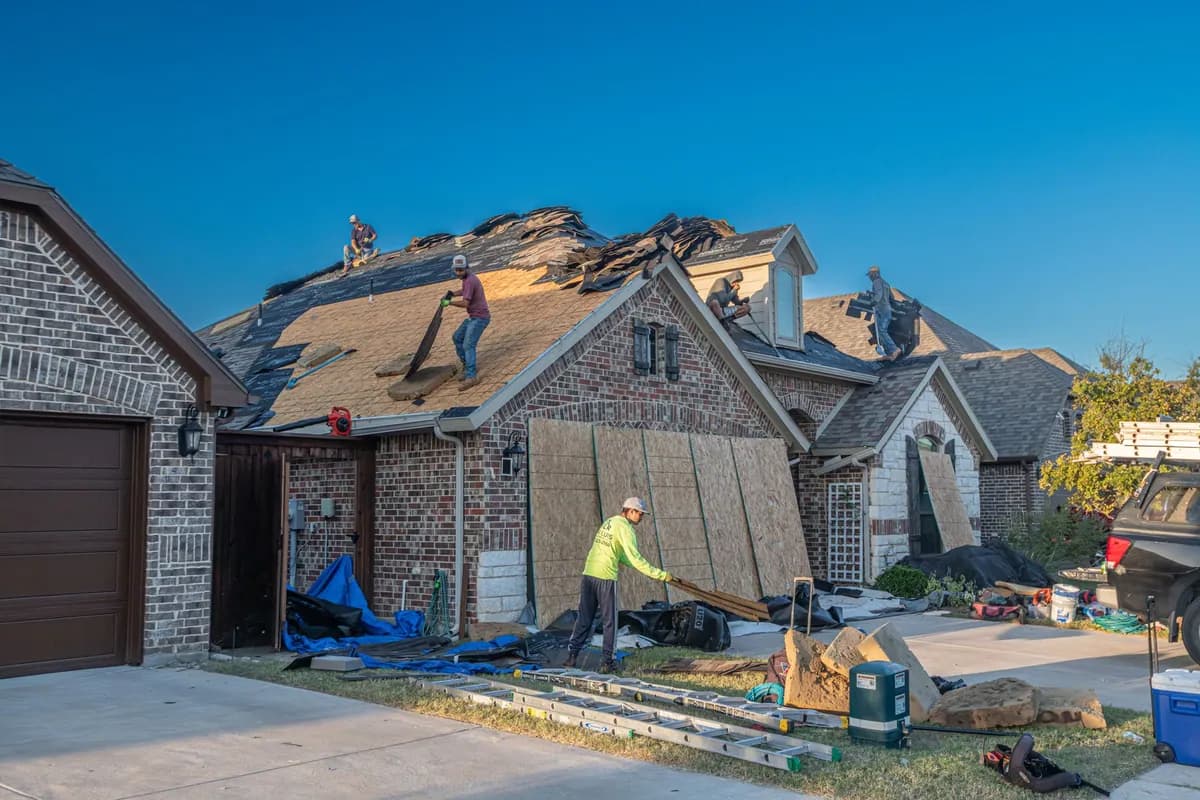
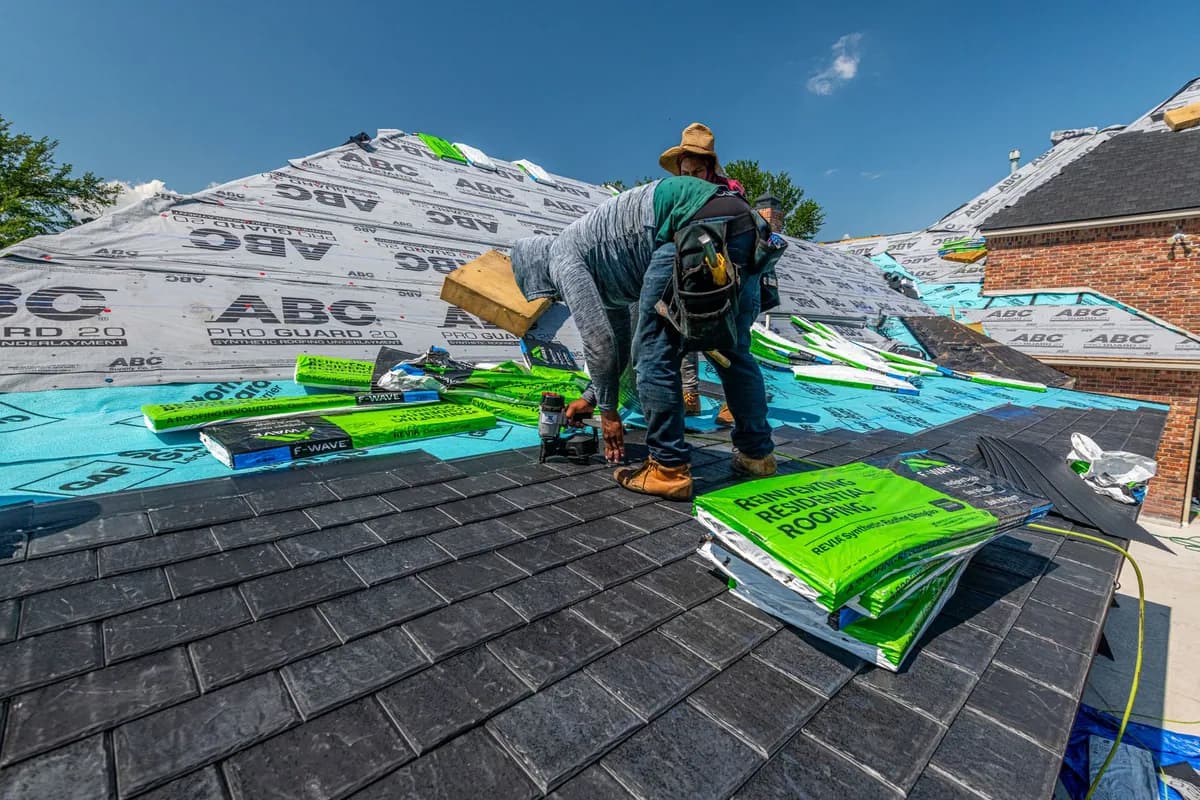
Tear-off comes first and is the loudest phase. The roof is then dried in with underlayment and membranes, so the house is protected even if the covering is not yet complete. Shingling follows, then ventilation and ridge caps.
If soft decking is found during tear-off, we will talk to you about it before replacing it. That is the most common reason a scope changes mid-job, and it is why being reachable by phone is helpful even if you are not home.
Afterwards
The site is cleared, debris removed and the ground swept with a magnet for nails. It is worth doing your own walk around the perimeter over the following days as well — nails can work up out of grass, and a second check costs nothing.
Take a look in the attic after the first heavy rain. It is the simplest confirmation that everything is performing as it should.